Downloads

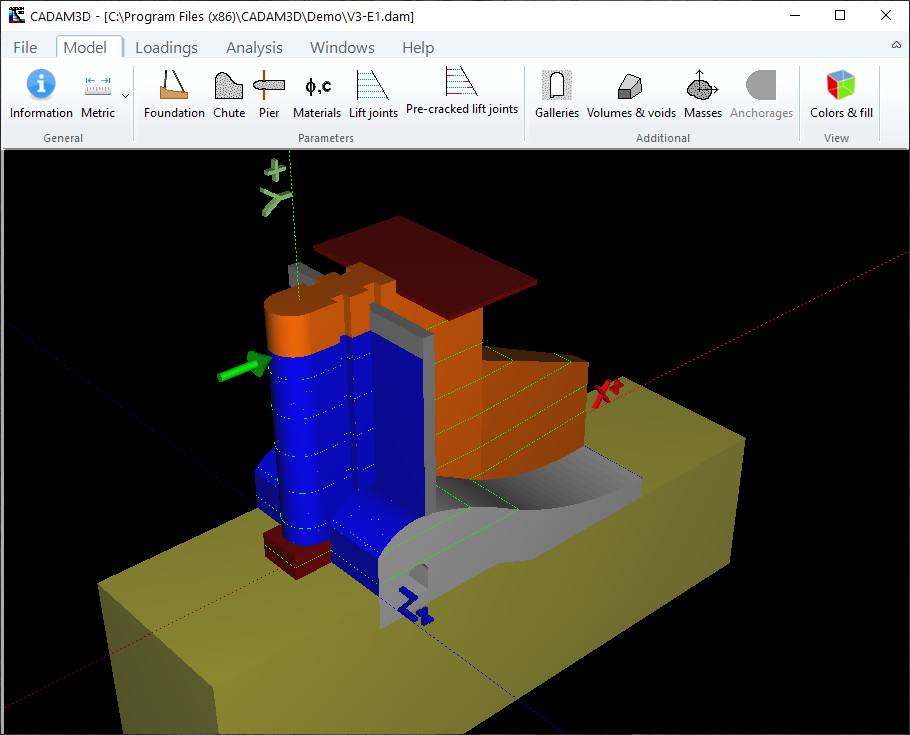
CADAM3D is a user-friendly software based on the gravity method originally developed for one of the world biggest concrete dam owner, Hydro-Quebec, and for Dams and Hydrology of the Quebec Ministry of Environment (Quebec's legislator for dam safety). CADAM3D is fully functional and is intensively used by Hydro-Quebec since 2005. To our knowledge, no other software similar to CADAM3D is available at this time.
If you perform stability analyzes of concrete hydraulic structures, this software will allow you to perform them much faster and more efficiently. If you are interested in this type of software and would like to try CADAM3D for free, please click on the button "Contact us for a free trial of CADAM3D" to send us a message.
"Una Historia Universal de la Arquitectura Vol 1 PDF" es un libro que ofrece un recorrido exhaustivo por la historia de la arquitectura, desde las primeras civilizaciones hasta la actualidad. Escrito por expertos en el campo, este volumen es el primero de una serie que busca cubrir la evolución de la arquitectura en todo el mundo. La versión en PDF ofrece una forma cómoda y accesible de explorar el contenido, permitiendo a los lectores navegar por las páginas de manera fácil y rápida.
Si estás interesado en descargar "Una Historia Universal de la Arquitectura Vol 1 PDF", hay varias opciones disponibles en línea. Busca en librerías digitales o sitios web de descarga de libros para encontrar una copia de este valioso recurso. ¡Disfruta del recorrido por la historia de la arquitectura y descubre la riqueza y diversidad de las estructuras que han dado forma a nuestro mundo! una historia universal de la arquitectura vol 1 pdf
La arquitectura es una de las disciplinas más antiguas y fascinantes de la humanidad. Desde las primeras construcciones humanas hasta las estructuras modernas y futuristas, la arquitectura ha evolucionado de manera significativa a lo largo de la historia. Para aquellos interesados en explorar la rica historia de la arquitectura, "Una Historia Universal de la Arquitectura Vol 1 PDF" es un recurso invaluable. En este artículo, nos sumergiremos en el mundo de la arquitectura y exploraremos la importancia de esta obra. "Una Historia Universal de la Arquitectura Vol 1
"Una Historia Universal de la Arquitectura Vol 1 PDF" es un recurso invaluable para aquellos interesados en la historia de la arquitectura. Con su recorrido exhaustivo por la evolución de la arquitectura, este libro es fundamental para estudiantes, arquitectos, diseñadores y amantes de la historia y la cultura. La versión en PDF ofrece una forma cómoda y accesible de explorar el contenido, lo que la hace ideal para aquellos que buscan aprender y disfrutar de la rica historia de la arquitectura. Si estás interesado en descargar "Una Historia Universal
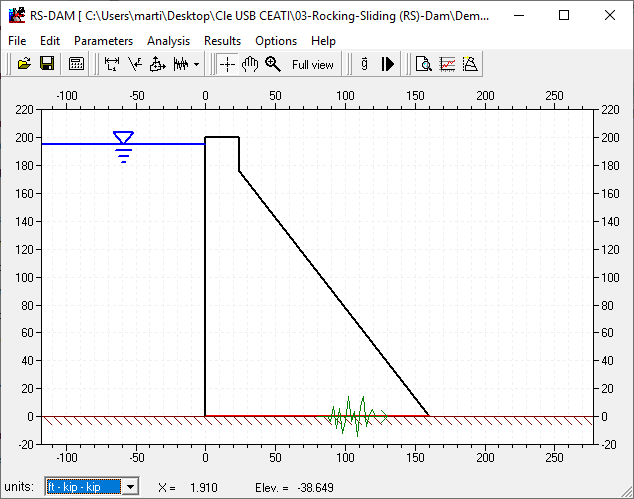
RS-DAM is a computer program that was primarily designed to provide a computational tool to evaluate the transient response of a completely cracked concrete dam section subjected to seismic loads. RS-DAM is also used to support research and development on structural behavior and safety of concrete dams.
RS-DAM is based on rigid body dynamic equilibrium. It performs a transient rocking and/or sliding analysis of a cracked dam section subjected to either base accelerations or time varying forces. Several modelling options have been included to allow users to explore the influence of parameters (e.g. geometry, additional masses, variation of the uplift force upon rotation, hydrodynamic pressures in translation (Westergaard) and rotation, center of rotation moving with sliding, coefficient of restitution of impact, etc...). RS-DAM is developed in a university context and has no commercial aspect.
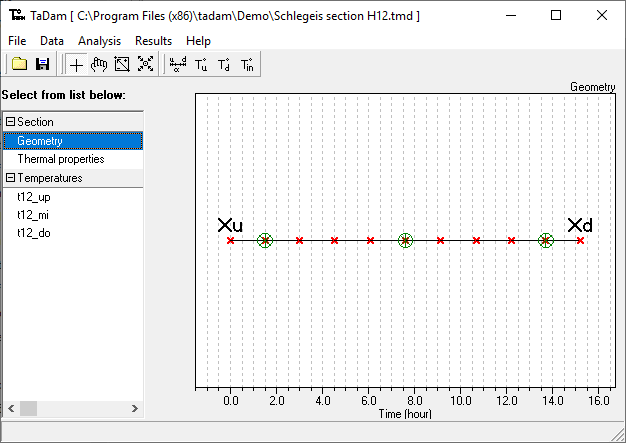
TADAM (Thermal Analysis of concrete DAMs) software employs a new frequency-domain solution technique to solve the 1D thermal transfer problem, allowing the calculation of temperature histories in a concrete dam section.
The direct solution calculates the evolution of the temperature distributions from the temperature histories of the upstream and downstream faces. The inverse solution uses temperature histories, measured inside the section, in order to calculate the temperature fields at the external faces, while taking into account the thermal wave attenuation effects and the phase angles along the section.
TADAM is developed in a university context and has no commercial aspect.